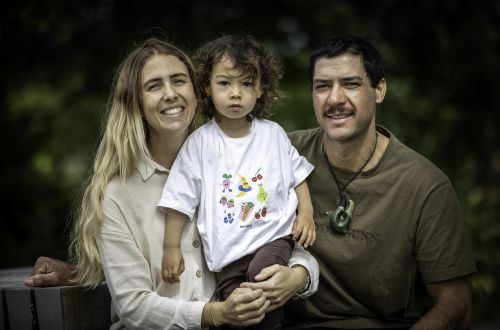
Casey and Ryan's Story
For Ryan and Casey, losing two pēpi to preterm birth changed their world. With the support of their local service and a specialist preterm birth clinic, they found a pathway to welcome their son Maika — “an absolute blessing”.
The Carsoika Collaborative was very fortunate that Casey and Ryan agreed to share their story with the Herald. They were keen to raise more awareness about extreme preterm birth and support our mahi.
We are grateful to the Herald for providing access to Premium promotional video sharing Casey and Ryan's story.
You can view the full Herald written article here: Premature birth: How families who lost multiple babies gained another chance at parenthood - NZ Herald
Their journey through loss
Casey was 29 years old when she first became pregnant. She described everything as “cruisy” at 19 weeks pregnant. She and Ryan didn’t know what preterm birth was until things changed very suddenly while at work one day; Casey felt the urge to push. As Casey shares, “I had no idea what preterm birth was until I went into early labour with our son, Harry, at 20 weeks.”
Being born at 20 weeks was too early to be able to help Harry survive, and their local hospital seemed limited in how it could provide the right care to support Casey and Ryan through this traumatic delivery.
Sadly, another loss came soon after. Ryan says, “We lost our first son, Harry in 2020 and then our next son in 2021.” Casey had a cervical stitch placed in her second pregnancy, but unfortunately, it didn’t hold. Monty was born at 24 weeks, and tragically, he didn’t survive.
The impact has been deep and long-lasting. Casey describes, “The effect of losing two babies to preterm birth was quite a lot, I felt like I kind of lost myself, every day is a challenge, and it still plays on my mind.”
Even through heartbreak, their desire to grow their whānau stayed strong. As Ryan says, “It's something we didn't want to experience again. But at the same time, we really wanted children.”
Support and intervention
Finding the right care became a turning point. Casey explains how they were connected with a specialist preterm birth clinic in Auckland. After careful counselling and consideration, they elected for a transabdominal cervical cerclage. This was placed before Casey became pregnant. Once she was pregnant, they had very regular follow-up appointments, travelling to Auckland every two weeks until 24 weeks of pregnancy, while also seeing a local obstetrician in Rotorua.
Casey slowly passed the weeks when she had lost her pēpi, by 26 weeks she felt like she could start to relax. At 38 weeks she gave birth to Maika, in Rotorua Hospital.
Ryan says, “The support we received in the process of having Maika was huge.” Casey encourages other whānau to speak up and seek information early: “I encourage people to reach out, there are risk factors. So, it's about talking and finding out if you have those risk factors.”
Welcoming Maika
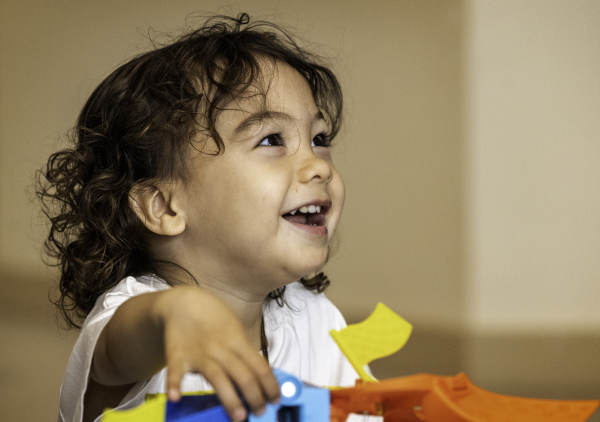
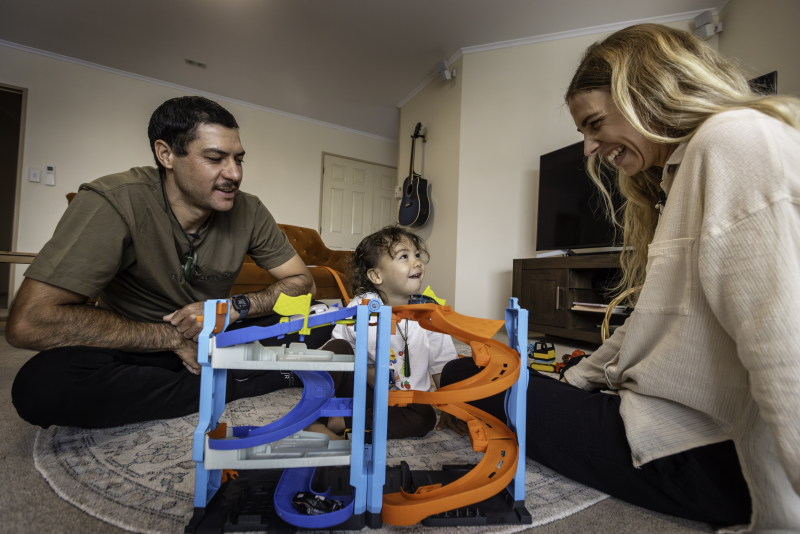
After so much loss, welcoming their son Maika felt unreal. Casey reflects, “The love you have after loss – it’s just the best feeling. Maika is an absolute blessing. Every day, we're so thankful that we have a happy and healthy baby.”
Ryan describes Maika with pride and joy: “He's the little guy that we've always wanted. He's so happy and fun to be around, it's just cool to see him evolving and being him.”
They still have moments of disbelief, and some sadness lingers, but life is beautiful with their son and every day is an adventure.
A message for other whānau
For whānau who may be facing similar uncertainty, Ryan shares a simple but powerful message:
“Just have faith in it and reach out for those services… because, you know, it really can happen even when you’re quite down and out.”
Their story shows that with the right support, information, and specialist care, hope is possible — even after multiple preterm losses.
Casey underwent a Transabdominal cervical cerclage (TACC). This operation may be offered if a transvaginal cervical cerclage has been unsuccessful or if wahine/person has had extensive cervical surgery in the past. You can find out more about TACC from our Whānau Information.
This whānau story was proudly supported by The Village NZ/The Wright Family Foundation.